
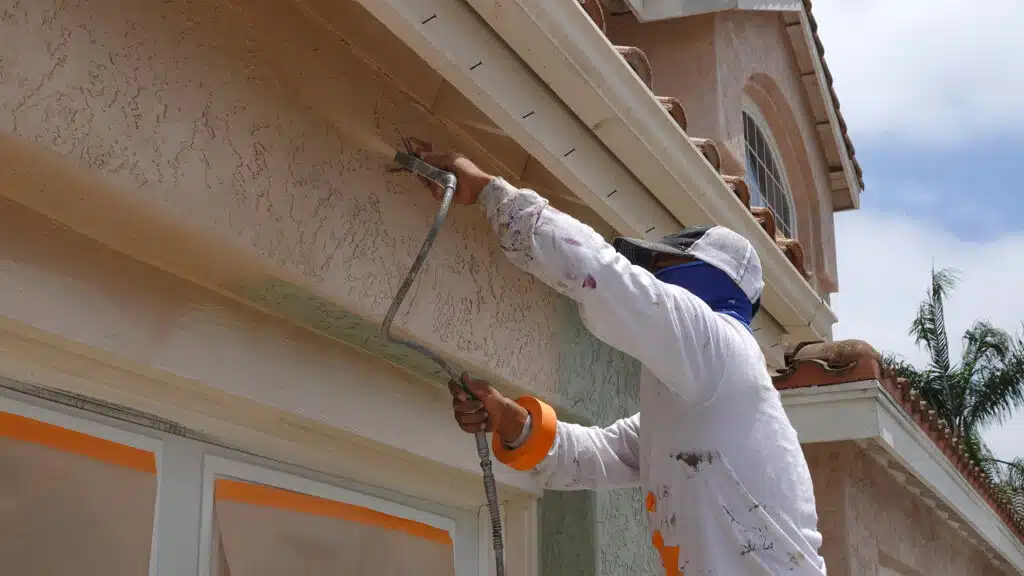
Jobsite Safety
Exterior Painting in Arizona Heat: Why Scheduling and Worker Safety Matter
Published June 26, 2026 · Arizona Pro 1 Team
Extreme heat changes work pace, hydration needs, surface temperature, and coating behavior. A responsible exterior plan accounts for all four.
Arizona exterior painting is not simply an indoor process moved outside. Heat affects workers, substrates, tools, drying, and the usable application window.
Air temperature is not surface temperature
Direct sun can make stucco, metal, and doors considerably hotter than the surrounding air. Product data sheets define acceptable application conditions; crews should check the actual surface and forecast rather than relying on a single daily high.
Plan shade and work sequence
Professional crews can follow the building orientation, completing shaded elevations during appropriate windows and avoiding surfaces outside product limits.
Protect workers from heat stress
NIOSH identifies extreme heat as an occupational hazard and recommends hydration, acclimatization, rest, shade, training, and emergency planning. Homeowners should expect a responsible contractor to schedule around safety—not force continuous work through dangerous conditions.
Allow the schedule to serve the finish
Stopping or moving to another elevation can be the correct quality decision when temperature, wind, dust, or incoming weather changes.