Exterior Painting Process
Surface-by-surface prep. Arizona climate timing. Post-project care. All explained.
When to Paint
Your Exterior
Exterior painting in Tucson is entirely different from painting in a moderate climate. High temperatures prevent paint from flowing and curing correctly. Here is the actual weather window we work within — and why.
Jan
66°F
Feb
71°F
Mar
78°F
Apr
87°F
May
96°F
Jun
104°F
Jul
100°F
Aug
97°F
Sep
93°F
Oct
82°F
Nov
71°F
Dec
64°F
The Rule
Exterior paint should not be applied when surface temperatures exceed 90°F or when rain is forecast within 24 hours. In Arizona, this means painting in the early morning (before 10 AM) during transition months, and sticking to Oct–Feb whenever possible for full-day painting.
Surface-by-Surface Prep Guide
Different exterior surfaces require completely different prep. Here is exactly what we do for each.
Stucco
- Power wash at 1,500–2,000 PSI
- Crack mapping — document all cracks before repair
- Elastomeric stucco patch on cracks > 1/16 inch
- Sand feathered edges of patches smooth
- Alkali-resistant primer on all repaired areas
Pro Tip
Never skip the alkali primer on fresh stucco repair. Fresh cement is highly alkaline and will destroy regular primer adhesion within months.
Wood Trim & Fascia
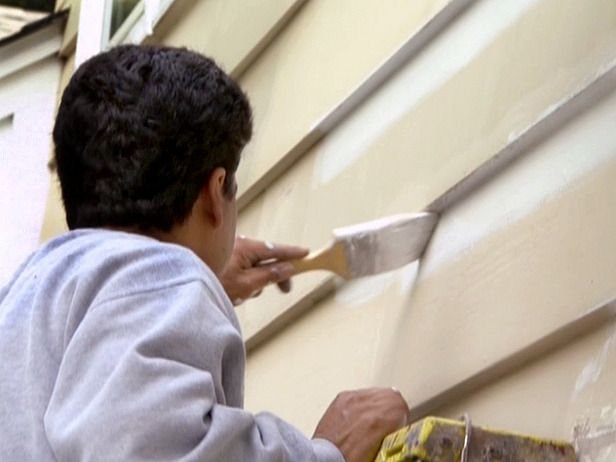
- Scrape all loose or peeling paint
- Sand to bare wood on any deteriorated sections
- Check for rot — replace any soft wood
- Caulk all gaps and joints
- Oil-based primer on all bare wood before paint
Pro Tip
In Arizona, wood trim dries out fast. We apply an oil-based primer that penetrates the grain and prevents the rapid moisture cycling that cracks paint.
Block Walls & CMU
- Wire brush to remove loose particles
- Muriatic acid wash to remove efflorescence
- Masonry sealer application (critical step)
- Block filler on rough CMU for smooth base
- Masonry-specific elastomeric topcoat
Pro Tip
Block walls are porous and often have efflorescence (white salt deposits). If you paint over it without treatment, the paint bubbles off within weeks.
Metal (Doors, Fixtures)
- Wire brush or sand to remove all rust
- Wipe with solvent to remove all oils
- Rust-inhibiting metal primer — mandatory
- No direct-to-metal paint without primer
- Enamel topcoat for maximum hardness
Pro Tip
Any rust left under paint will spread. We grind metal to bright, clean metal before priming — no shortcuts. Consider electrostatic painting for larger metal surfaces.
How to Care for
Your New Exterior
How you maintain your new exterior paint directly impacts whether it lasts 5 years or 12. These are the simple steps that protect your investment.
First 30 Days
Cure Period
Fresh exterior paint needs 30 days to fully cure. Avoid power washing, scrubbing, or applying any sprinklers directly onto painted surfaces.
Every 6 Months
Rinse With Hose
A gentle garden hose rinse removes desert dust that acts as abrasive. Do this in the early morning before heat builds up.
Every Year
Visual Inspection
Walk your exterior perimeter and look for hairline cracks forming at joints and corners. Small crack = easy fix. Ignored crack = water intrusion.
Every 3–5 Years
Touch-Up or Repaint
Small touch-ups on chips and scuffs every few years dramatically extend the life of the full repaint and preserve your warranty.
Product performance depends on the substrate, preparation, application, exposure, maintenance, and the selected coating system. The approved proposal documents the project-specific materials and terms.